Black Holes
Microsys Com Ltd.- EveryoneAge rating
- EducationCategory
- Aug 30, 2026Updated
- $0.99Price
Links to the official Google Play listing of com.microsys.BlackHoles. Last checked on Nov 23, 2026.

Screenshots

About this app
A 3D simulator of the mysterious stars called black holes and of their dynamics.
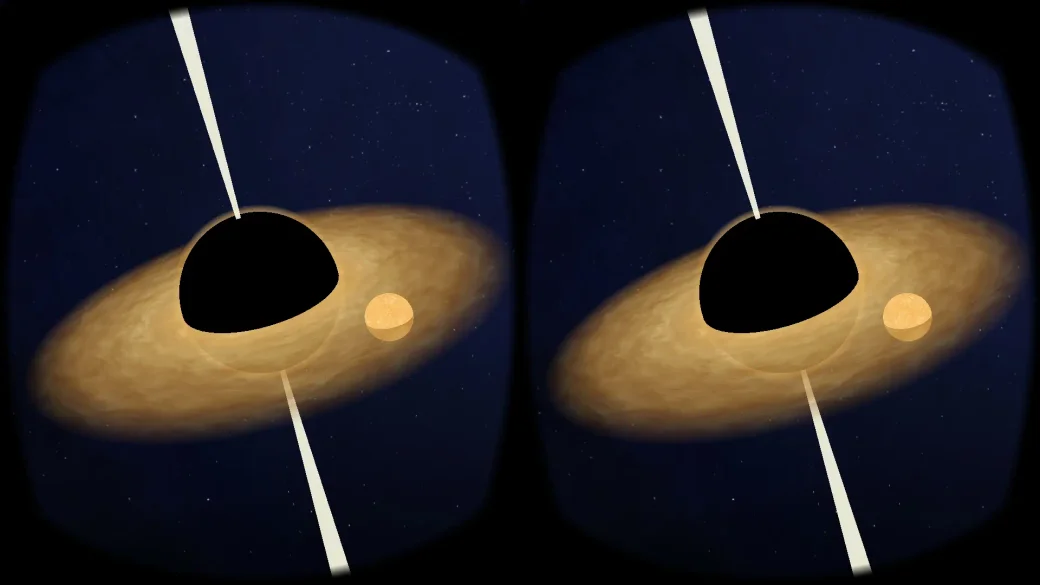
This app is a part of our educational series that shows the Universe and its wonders. Black Holes includes five spatial scenes and scenarios related to the various types of black holes we have observed until now, from regular to supermassive ones (as the black hole located at the core of the Milky Way galaxy). Imagine you are travelling in a fast spaceship that has reached this 'dark' star, now directly observing its accretion disk and the orbiting bodies. The Virtual Reality mode helps you make this interstellar journey more realistic, an experience beyond imagination. This app is designed for tablets and modern phones (landscape orientation, Android 6 or newer). We are hoping that Black Holes will help you understand these strange cosmic bodies, their complex dynamics and even the newly discovered phenomenon - the emission of gravitational waves.
Here is the description of the five scenes above:
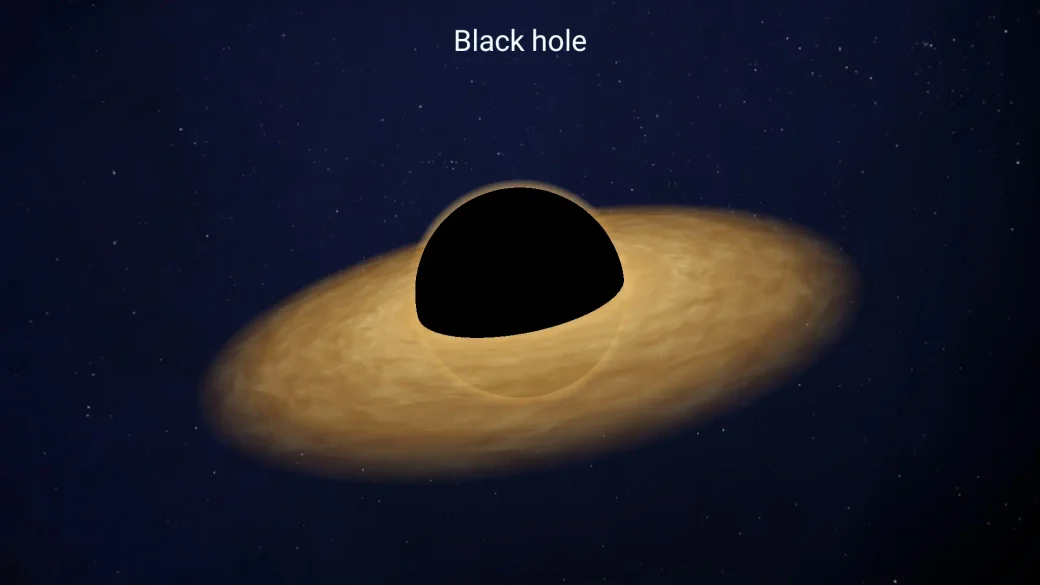
1. The first scene shows a simple, ordinary black hole of stellar mass and its rotating accretion disk (very likely to exist around this type of stars).
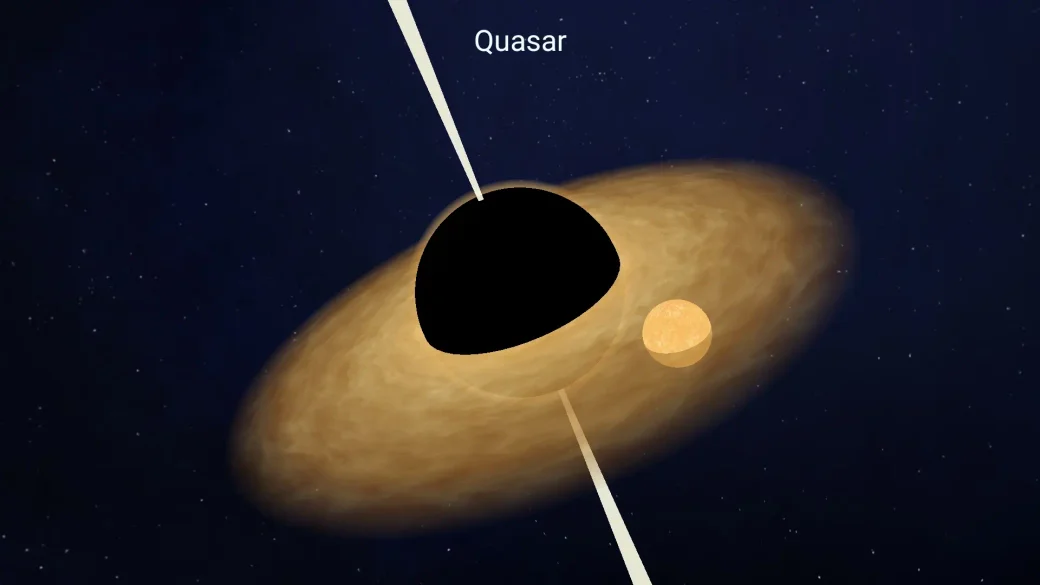
2. Now you can see a Quasar, a supermassive black hole (millions to billions of times the mass of the Sun) that is surrounded by a gaseous accretion disk. Two luminous, powerful plasma jets are emitted from the two poles of the star. Moreover, an ordinary star (whose orbit is very close) may be consumed in this process.
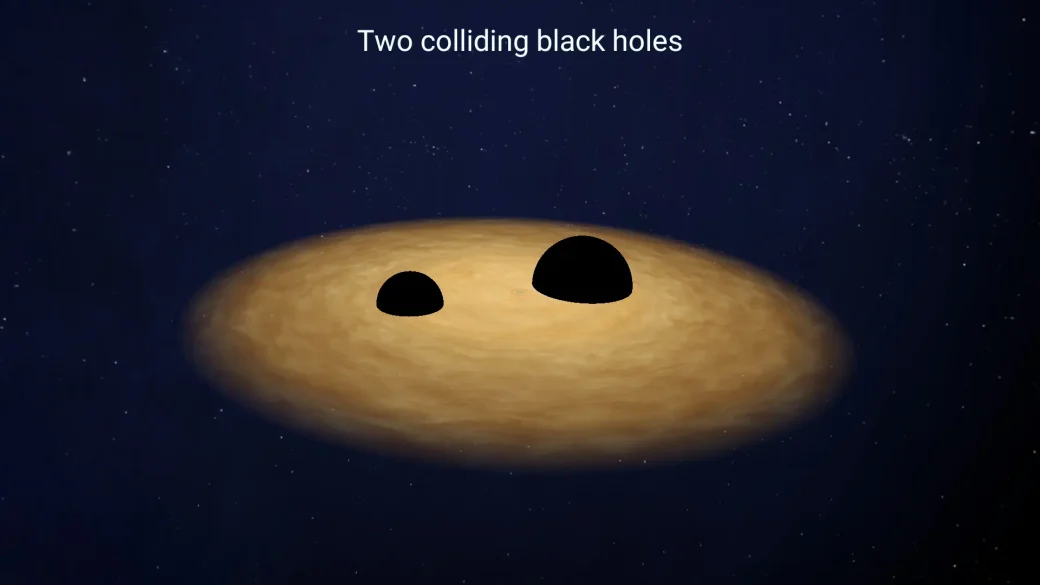
3. Two small black holes and their colliding process are the subject of this scene. The merger takes about 15 second, while these stars orbit closer and closer at increasingly speeds. In the end, the two black holes meet and merge, resulting a single, but bigger star.
4. Sagittarius A* is the location of a supermassive black hole at the center of the Milky Way. There are six stars orbiting near this black hole, and all their trajectories may be viewed in this scene (artist conception).
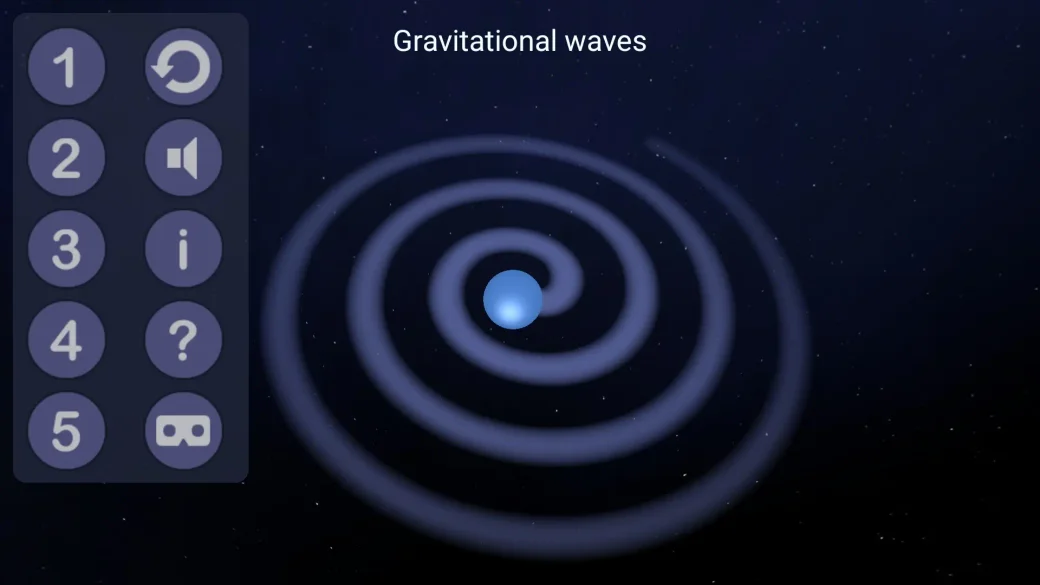
5. Imagine a binary star system in which the two stars (black holes, neutron stars) are revolving each other on gradually shrinking orbits. Each body emits gravitationally waves until the merger moment, and this type of radiation can be seen while propagating away from the star.
It should be noted that in VR mode, a double tap displays the app's menu, and a long tap changes the mode back to normal.
Features
-- special software optimization to lower the power consumption
-- simple commands - this app is very easy to use and configure
-- zoom in, zoom out, auto-rotate function
-- high definition pictures, background music
-- no ads, no limitations
-- text to speech synthesis
-- VR mode and gyroscopic effect
Data safety
What Microsys Com Ltd. declares on Google Play about the data this app collects and shares.
- No data shared with third partiesLearn more about how developers declare sharing
- No data collectedLearn more about how developers declare collection
What’s new
Version 12.5.0 · Aug 30, 2026
- Animation effects.
- Code optimization.
- Exit button added.
- Improved functionality.
- High resolution icon added.
Developer contact
- Emailinfo@microsys.ro
- Privacy policymicrosys.ro
- AddressSTR. DOAMNA GHICA NR. 6 BL. 3 SC. C ET. 10 AP. 119, SECTORUL 2 022832 Bucuresti Romania
Information
- Offered by
- Microsys Com Ltd.
- Category
- Education
- Version
- 12.5.0
- Updated
- Aug 30, 2026
- Released
- Sep 12, 2019
- Requires
- Android 6.0 or later
- Age rating
- Everyone
- Price
- $0.99
- Package name
- com.microsys.BlackHoles