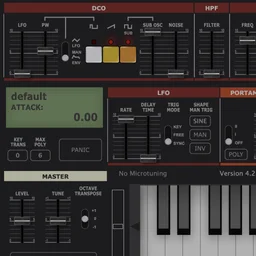
iVCS3
Official EMS VCS3 emulator
Diseñada para iPhone, iPad
22,99 € · Compras en la aplicación
- Clasificación por edad4+
- CategoríaMúsica
- DesarrolladorapeSoft
- IdiomasInglés
- Tamaño107,4 MB
Enlaza a la página oficial de App Store
Download.org no aloja ningún archivo de iVCS3. El botón abre la página de la aplicación en App Store, donde la publica apeSoft. Ficha comprobada por última vez el 12/11/2026.
Capturas de pantalla

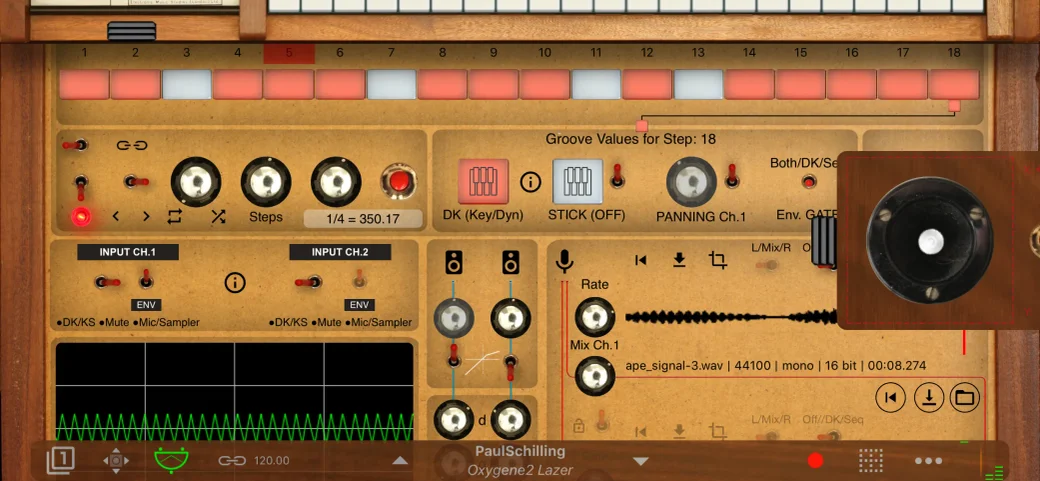
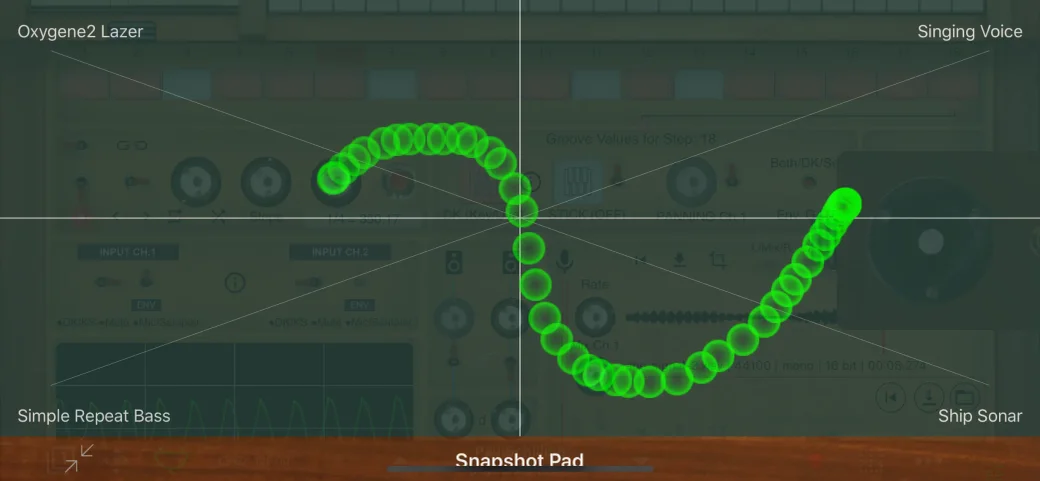
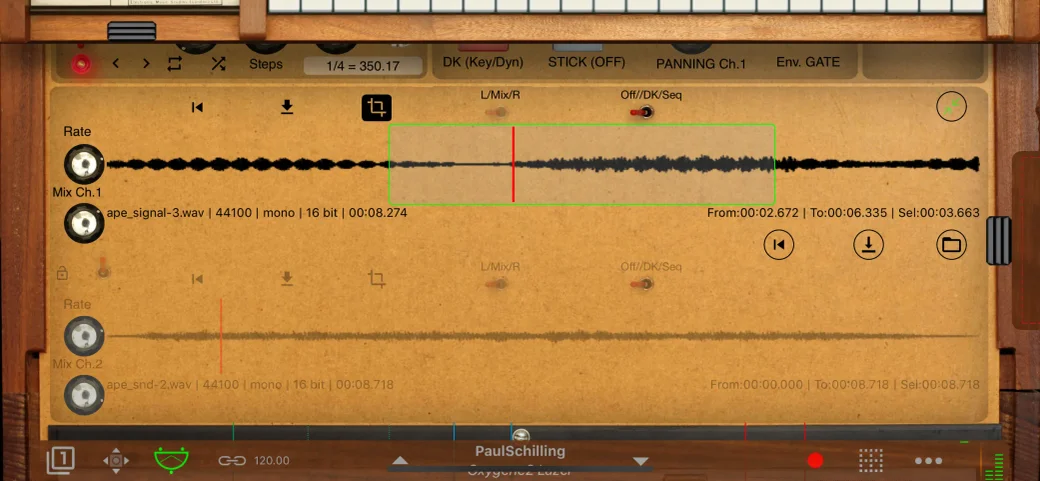
Acerca de
El desarrollador no ha proporcionado este texto en tu idioma.
iVCS3
Official EMS VCS3 emulator
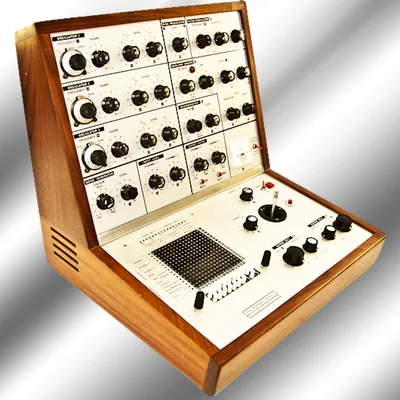
The VCS3 was created in 1969 by Peter Zinovieff's EMS company. The electronics were largely designed by David Cockerell and the machine's distinctive visual appearance was the work of electronic composer Tristram Cary. The VCS3 was more or less the first portable commercially available synthesizer—portable in the sense that the VCS 3 was housed entirely in a small, wooden case.
The VCS3 was quite popular among progressive rock bands and was used on recordings by The Alan Parsons Project, Jean Michel Jarre, Hawkwind, Brian Eno (with Roxy Music), King Crimson, The Who, Gong, and Pink Floyd, among many others. Well-known examples of its use are on The Who track "Won't Get Fooled Again" (as an external sound processor, in this case with Pete Townshend running the signal of a Lowrey Organ through the VCS3's filter and low frequency oscillators) on Who's Next. Pink Floyd's "On the Run" (from The Dark Side of the Moon) made use of its oscillators, filter and noise generator, as well as the sequencer. Their song Welcome to the Machine also used the VCS3. The bassy throb at the beginning of the recording formed the foundation of the song, with the other parts being recorded in response. The VCS3 was also a staple at the BBC’s Radiophonic Workshop, and was a regular (and most frightening) sound generator for the Dr Who TV series. Many fo the monsters and atmoshere;s created for the show came directly from the VCS3.
Description
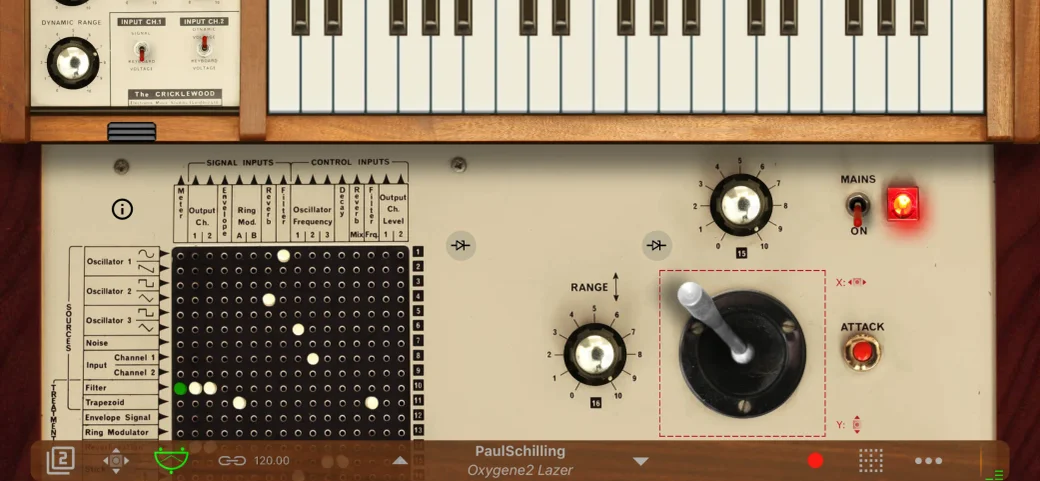
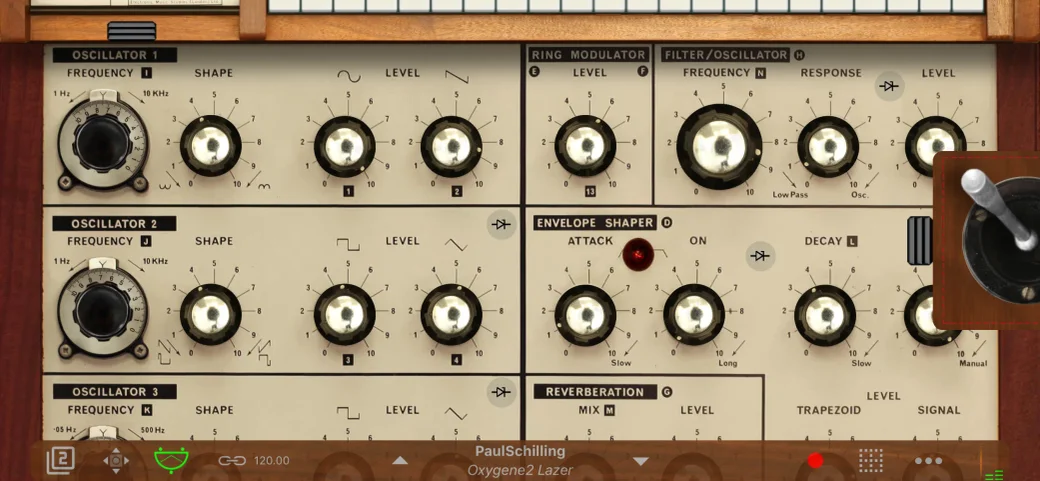
The VCS3 has three oscillators (in reality, the first 2 oscillators are normal oscillators and the 3rd an LFO or Low Frequency Oscillator), a noise generator, two input amplifiers, a ring modulator, a 18dB/octave (pre-1974) or 24dB/octave (after 1974) voltage controlled low pass filter (VCF), a trapezoid envelope generator, joy-stick controller, voltage controlled spring reverb unit and 2 stereo output amplifiers. Unlike most modular synthesizer systems which use cables to link components together, the VCS3 uses a distinctive patch board matrix into which pins are inserted in order to connect its components together.
Keyboards controller
DK1 keyboard controller
Although the VCS3 is often used for generating sound effects due to lack of built-in keyboard, there were external keyboard controllers for melodic play. The DK1 in 1969 was an early velocity sensitive monophonic keyboard for VCS3 with an extra VCO and VCA. Later it was extended for duophonic play, as DK2, in 1972. Also in 1972, Synthi AKS was released, and its digital sequencer with a touch-sensitive flat keyboard, KS sequencer, and its mechanical keyboard version, DKS, were also released.
(See: en.wikipedia.org/wiki/VCS3)
Novedades
Versión 3.6.7 · 1/11/2026
• New toolbar on iPad and iPhone: round buttons, a centered preset selector and a new button to show or hide the DK keyboard.
• Front and rear panels always fill the window height.
• The DK keyboard keeps its original proportions in any window.
• EMS modification panels scale with the interface.
• New modern Settings on iPad and iPhone, showing the real sample rate and buffer size.
• Clearer input level meter.
• Full support for resizable windows on iPadOS 27: the interface scales correctly at any window size.
• Portrait orientation is now supported on iPad.
• Knob actions (double tap on a knob) open in a floating panel that scales with the interface.
• MIDI, LFO and Accelerometer assignment panels now scale with the interface.
• The SYNC view (Local-Host, MIDI Clock, Ableton Link) scales correctly and has a cleaner layout.
• The side menu, panels and Close buttons stay in the right position when the window is resized.
• Launch screens adapt to the window size.
• Clearer message when the audio device uses a fixed sample rate.
• Bug fixes and stability improvements.
Privacidad de la aplicación
Lo que apeSoft declara en App Store sobre cómo esta aplicación gestiona los datos.
-
No se recopilan datos
El desarrollador no recopila ningún dato de esta aplicación.
Las prácticas de privacidad pueden variar, por ejemplo, según las funciones que uses o tu edad.
Información
- Vendedor
- Alessandro Petrolati
- Categoría
- Música
- Versión
- 3.6.7
- Actualizado
- 1/11/2026
- Publicado
- 6/3/2014
- Tamaño
- 107,4 MB
- Requiere
- iOS 17.0 o posterior
- Clasificación por edad
- 4+
- Precio
- 22,99 €
- Compras en la aplicación
- Sí
- Idiomas
- Inglés
- Copyright
- © apeSoft