
Transformer Calculator Plus
Step-up Step-down Transformer
Designed for iPhone, iPad, iPod touch
$2.99
- Age rating4+
- CategoryUtilities
- DeveloperNitrio
- LanguagesEnglish
- Size1.2 MB
Links to the official App Store page
Download.org hosts no file of Transformer Calculator Plus. The button opens its official App Store page, published by Nitrio. Listing last checked on Nov 12, 2026.
Screenshots
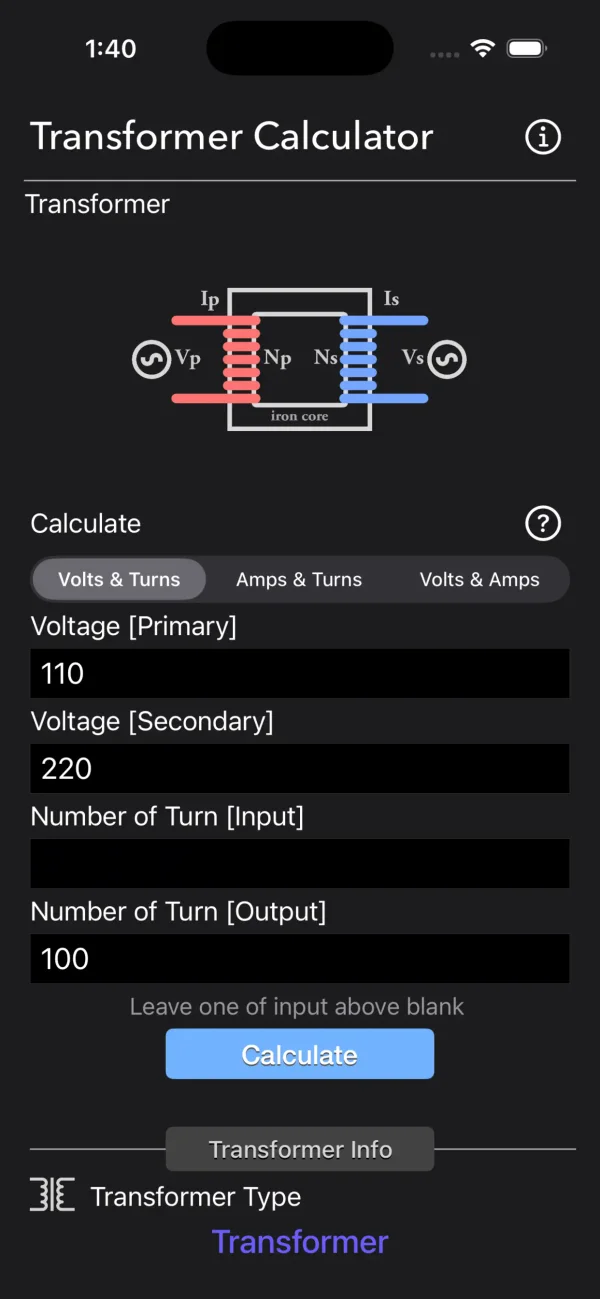
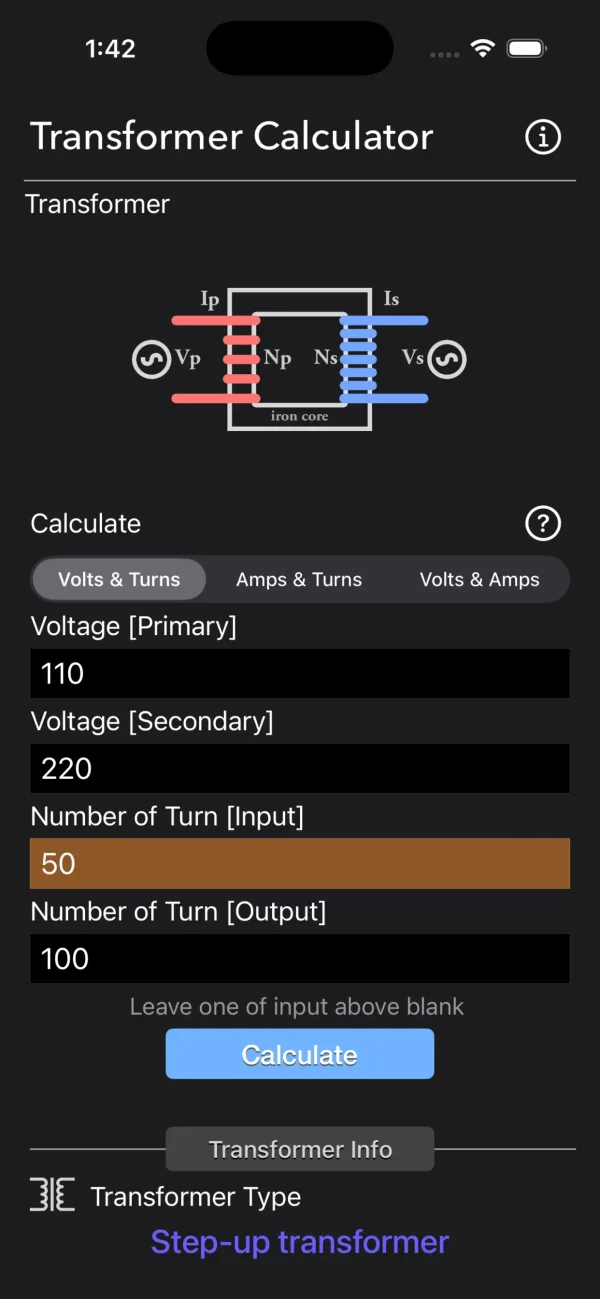
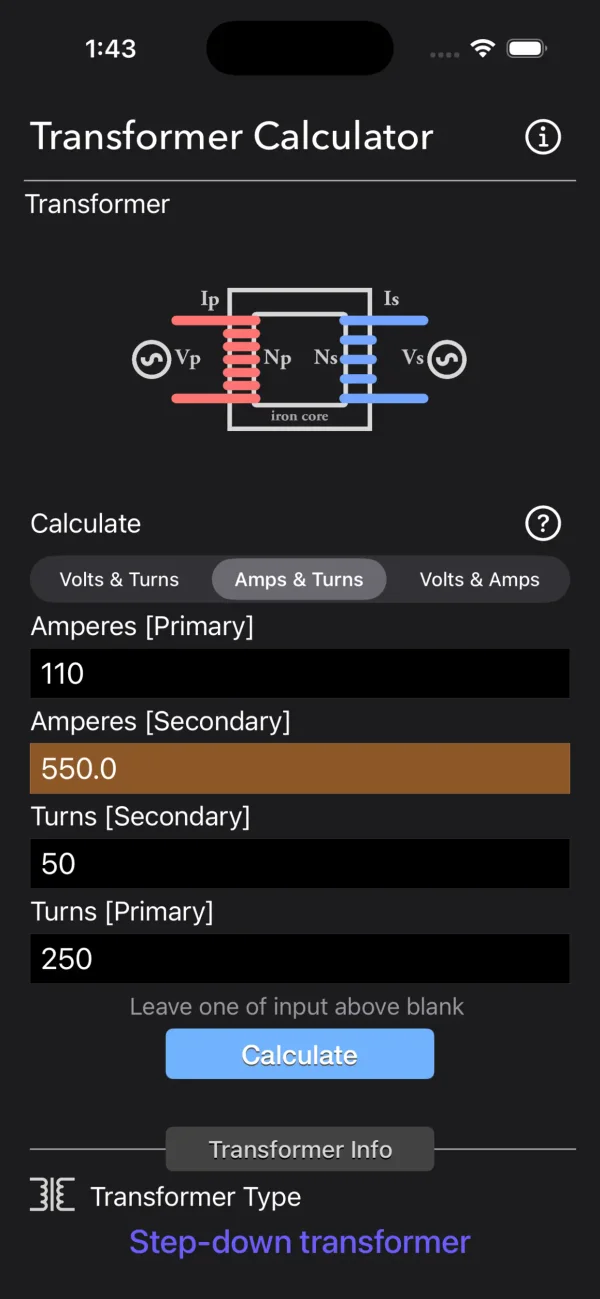
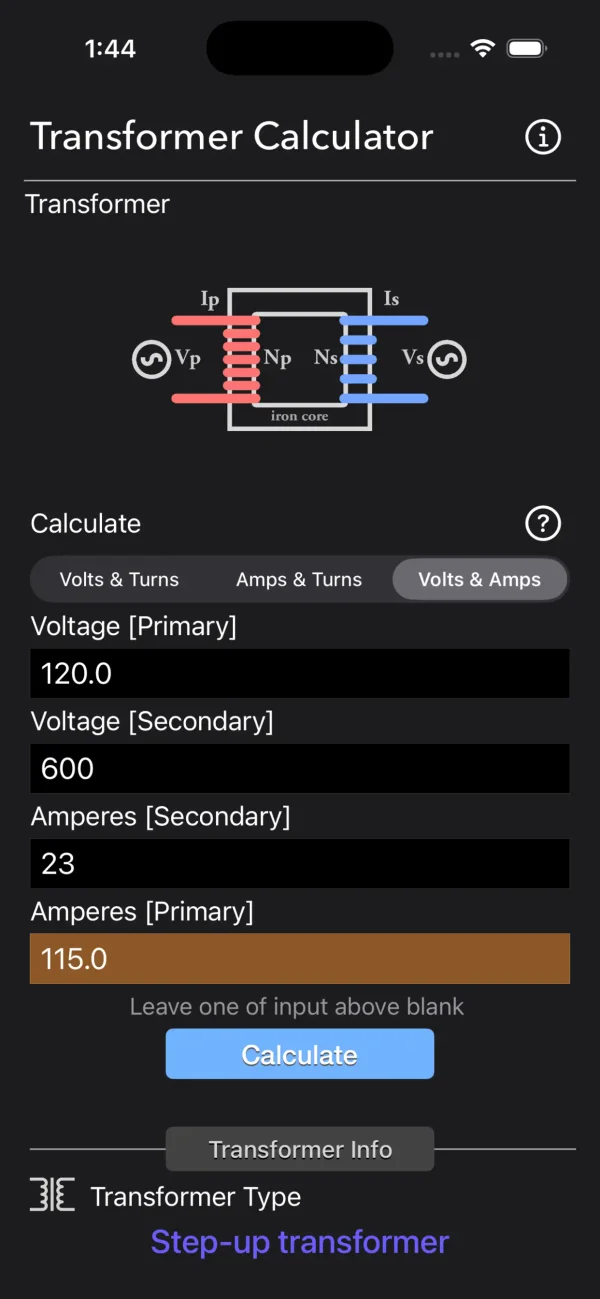


About
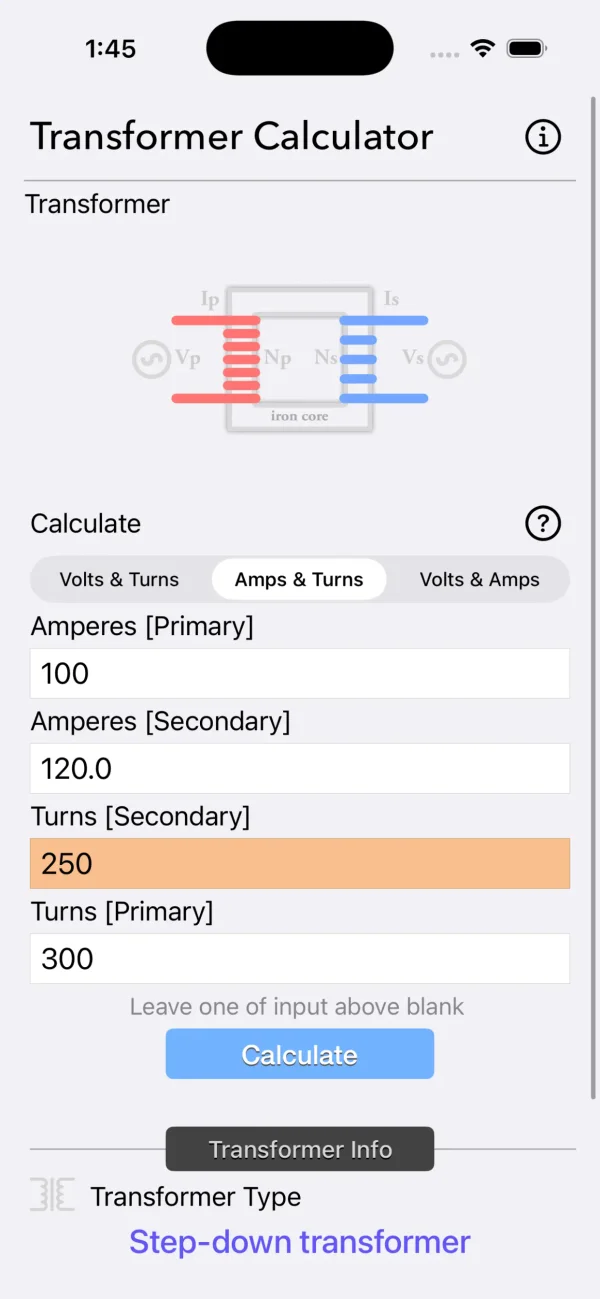
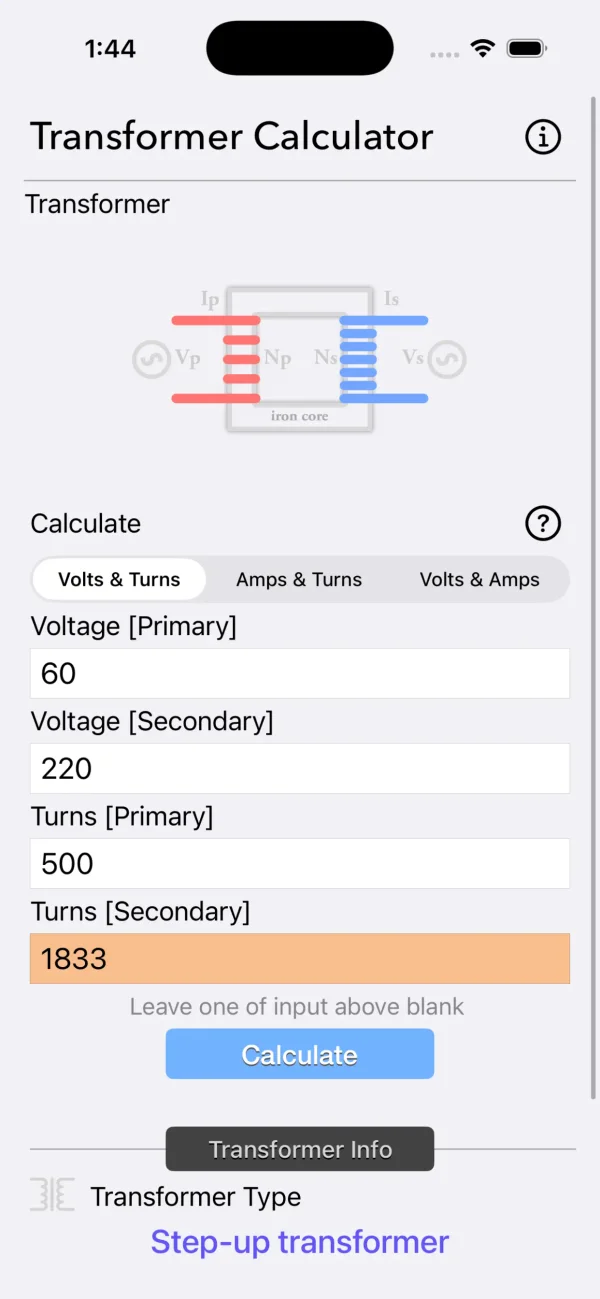
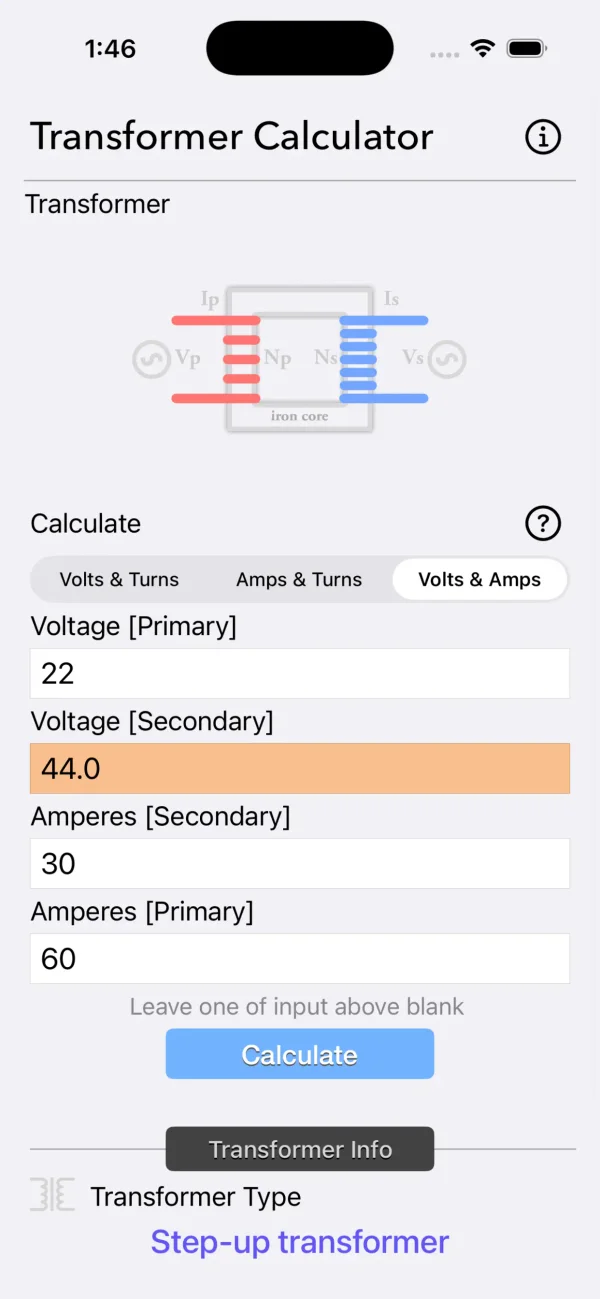
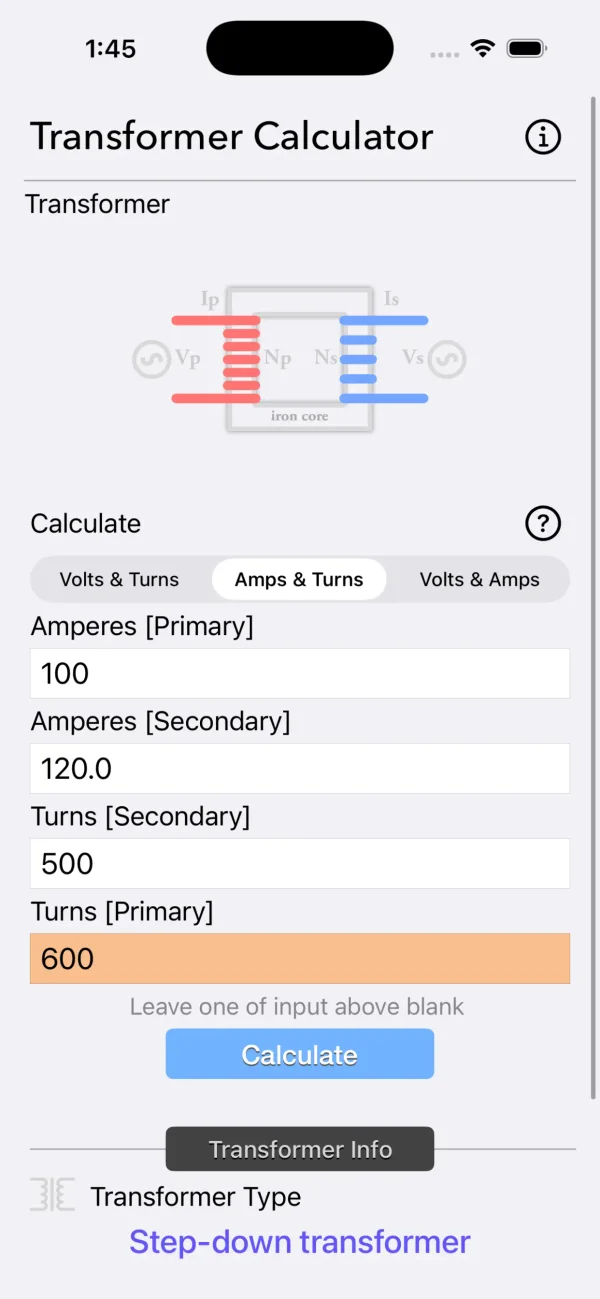
Transformer Calculator calculate any parameter within the transformer equation, including primary and secondary voltage, current, and turns.
Transformer Calculations Include:
Transformer Turns Ratio – Current and Turns
Transformer Turns Ratio – Voltage and Turns
Transformer Turns Ratio – Voltage and Current
The result will indicate whether the transformer is step-up or step-down.
Transformers are primarily used as power converters. The two types—step-up and step-down—operate on the same principle but in opposite directions. A step-up transformer converts a lower AC voltage to a higher voltage, while a step-down transformer reduces a higher AC voltage to a lower level. For example, if a country uses 110 V power, a step-up transformer converts it to 220 V, and a step-down transformer does the reverse. Both work with alternating current (AC).
A transformer consists of a soft iron core with two coils wound around it, which are not electrically connected. These coils may be wound on separate limbs of the iron core or placed one over the other.
The coil to which the alternating voltage is applied is called the primary coil or primary winding. When an alternating voltage is applied, the resulting alternating current in the primary winding generates a changing magnetic field. This changing field induces an alternating current in the secondary coil. The magnitude of the induced voltage depends on the number of turns in the secondary winding.
All transformers have a nameplate rating. It is best to operate them within the voltage limits specified. Using a step-down transformer below its rated limit can support a wide range of applications, but exceeding the specified limit is dangerous and may cause electrical failure.
The relationship between voltage, current, and the number of turns in each coil is given by:
Vp/Vs = Np/Ns = Is/Ip
Where:
Vp – Primary voltage
Vs – Secondary voltage
Np – Primary turns
Ns – Secondary turns
Ip – Primary current
Is – Secondary current
Thank you for your support, and please visit nitrio.com for more apps for your iOS devices.
What’s new
Version 1.2 · Sep 30, 2025
- Updated for the newest devices.
- Minor bugs fixed.
App privacy
What Nitrio declares on the App Store about how this app handles data.
-
Data not collected
The developer does not collect any data from this app.
Privacy practices may vary, for example with the features you use or your age.
Information
- Seller
- Tan Chia Ling
- Category
- Utilities
- Version
- 1.2
- Updated
- Sep 30, 2025
- Released
- Apr 22, 2018
- Size
- 1.2 MB
- Requires
- iOS 13.0 or later
- Age rating
- 4+
- Price
- $2.99
- Languages
- English
- Copyright
- © Tan Chia Ling
You might also like
-
 Calculation TransformersTransformer Math Tool
-
 Transformer Calc 2Utilities
-
 Transformer Calculator ProPower Transformer Design
-
 Resistor Tools ProUtilities
-
 Coil Calculator - InductorInductor & Coil Design Tool
-
 LED Ohm CalcOhmmeter calculation of LED
-
 Voltage Drop ProUtilities
-
 Panel ManagerElectrical Panel Scheduling
-
 eLoad CalculatorBest Electric Load Calculator
-
 Electrical Load Calc NECNEC Art.220 Residential Load