- 対象年齢4+
- カテゴリヘルスケア/フィットネス
- 開発元Rui Liu
- 言語英語
- サイズ40.8 MB
App Storeの公式ページにリンクしています
Download.orgはEyeCanDoのファイルを一切ホストしていません。ボタンを押すと、Rui Liuが公開しているApp Storeのアプリページが開きます。ページの最終確認:2026/11/17。
スクリーンショット
概要
開発元はこのテキストをお使いの言語で提供していません。
EyeCanDo is an app to support eye gaze-based communications for people with limited mobility and communication due to disability. A user can control the app entirely using eyes, to ask for help, type messages, play music, among others.
To use the app, you will first set up your device(iPad or iPhone) for positioning properly. Make sure your device is in front of your face and look still at the activate button to enter.
After setup, you will need to do calibration. Make your eye gaze follow the blue dots during the calibration process and click the back button when you finish.
After the calibration, you can go to the main interface of EyeCanDo. Some example functionalities include:
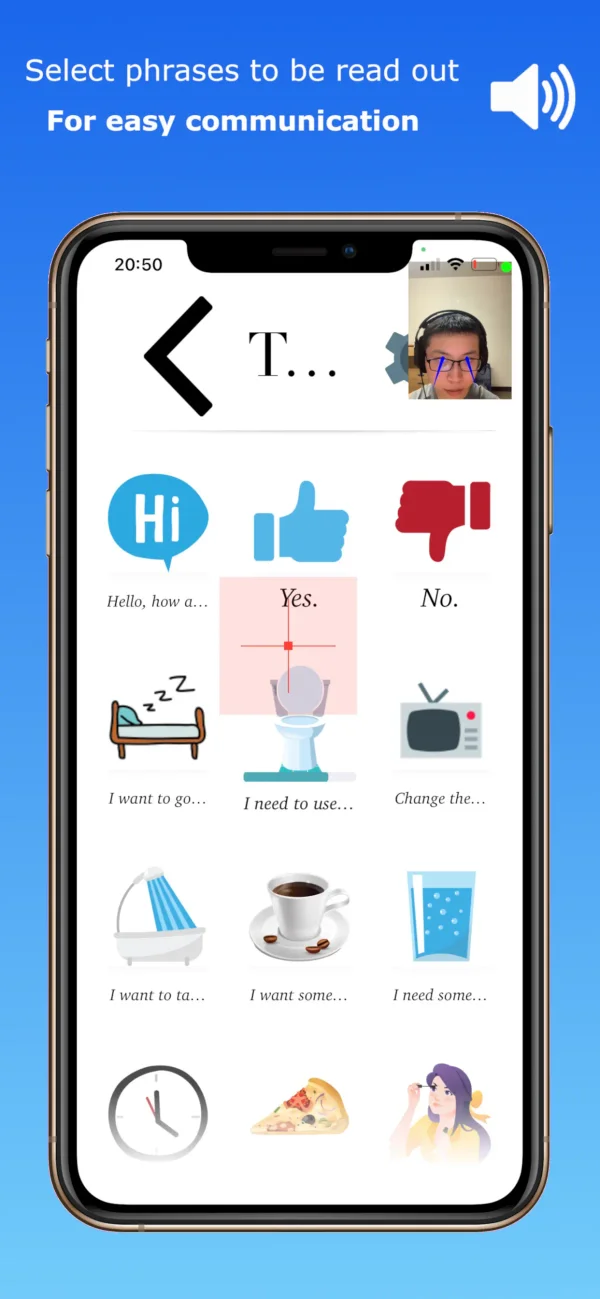
Text to Speech: built-in phrases expressing feeling, need or basic answers. When an item is selected with gaze, a speech synthesizer will utter the sentence.
Music: You can play your music from your Apple Music with eye gaze for selection and control.
Emergency: When selected, a siren will be played for asking emergency help.
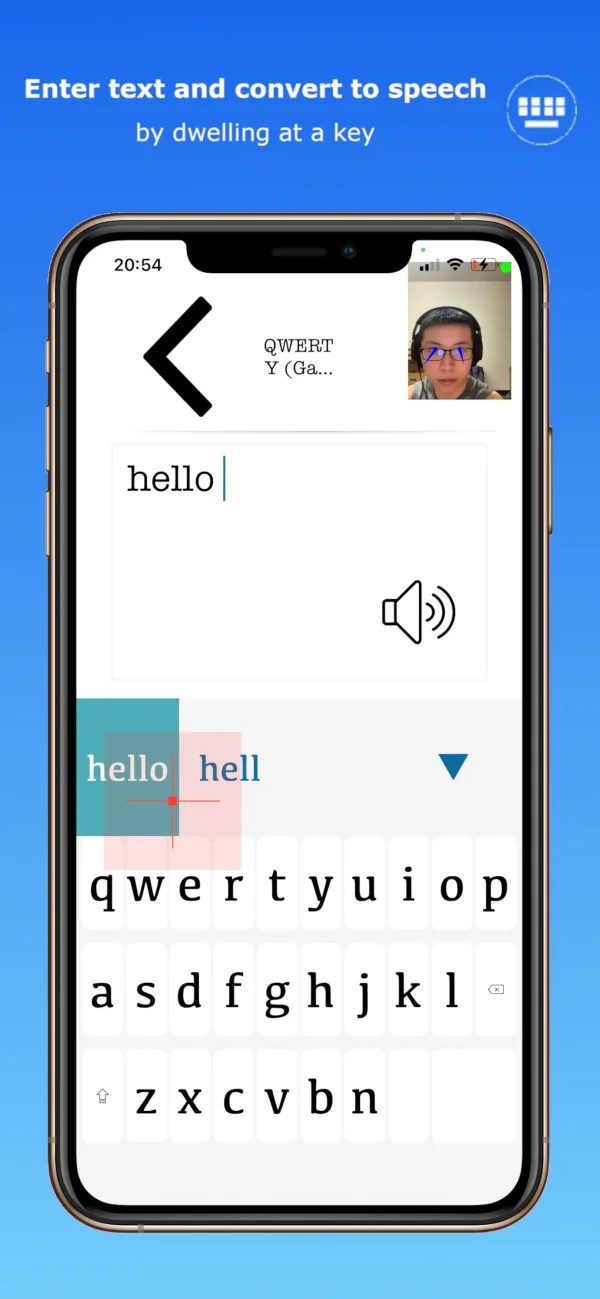
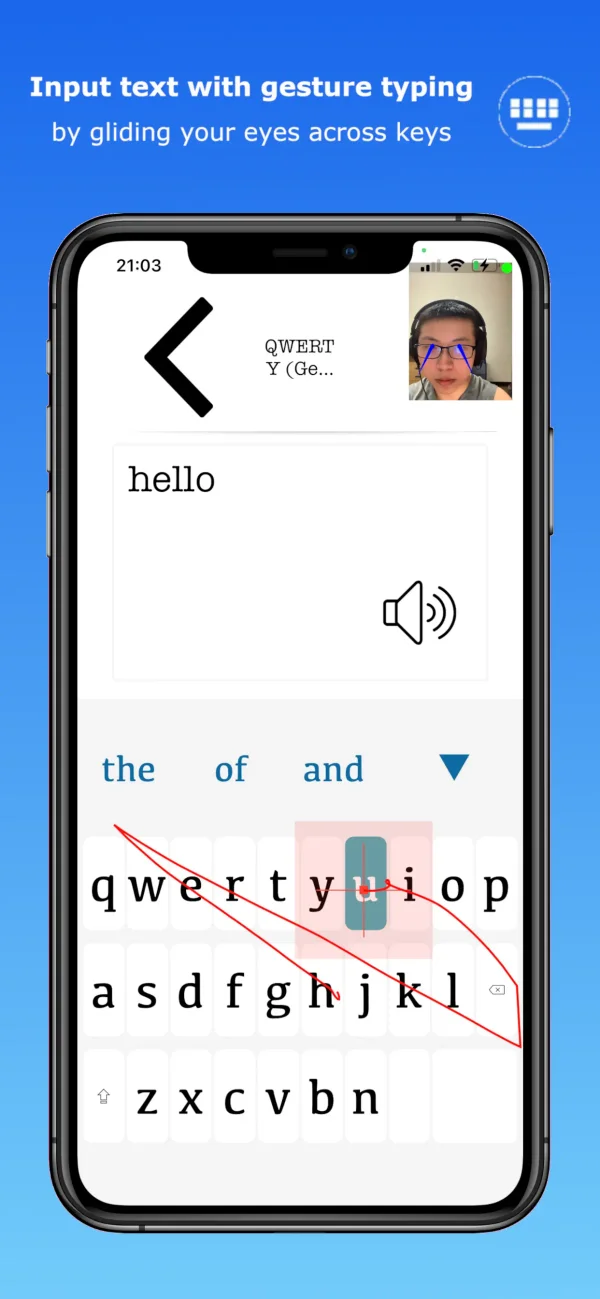
Typing: You can use eye gaze to type with a virtual keyboard.
Settings: You can customize the app, such as changing brightness and volume.
新機能
バージョン 1.2 · 2025/7/31
In this release(1.2), we included some bug fixes and performance improvements. We also added UI updates and a new keyboard that accelerates typing.
アプリのプライバシー
このアプリのデータの取り扱いについて、Rui LiuがApp Storeで申告している内容です。
-
ユーザーに関連付けられないデータ
収集される場合がありますが、ユーザーの識別情報には関連付けられません。
- 使用状況データ
- 診断
プライバシーの取り扱いは、ご利用の機能やお客様の年齢などに応じて異なる場合があります。
情報
- 販売元
- Rui Liu
- カテゴリ
- ヘルスケア/フィットネス
- バージョン
- 1.2
- 更新日
- 2025/7/31
- リリース
- 2021/6/13
- サイズ
- 40.8 MB
- 必要条件
- iOS 13.0以降
- 対象年齢
- 4+
- 価格
- 無料
- 言語
- 英語
- 著作権
- © Stony Brook University